 Concrete Sleeper
 Concrete Block
 Timber Sleeper
 Brick
Brick Palisade
 Sandstone
 Repairs & Replacement
 What A Wall Costs
 Rules, Approvals & Engineering
Palisade Retaining Walls In Canberra
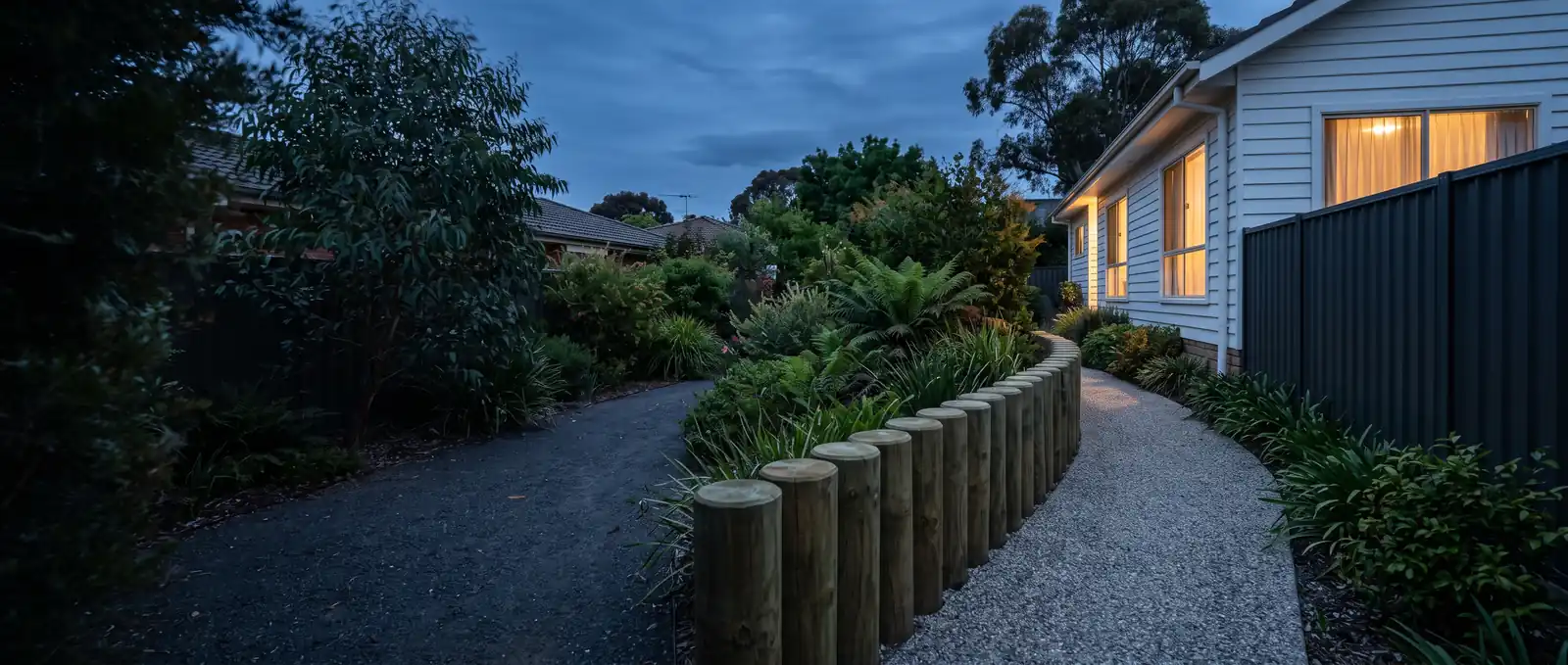
In Canberra, a palisade retaining wall is a row of treated pine logs standing upright, side by side, each set in concrete. The logs are carried in one at a time, so it can go where a machine cannot get in.

What A Palisade Retaining Wall Is
A palisade retaining wall is a row of round treated pine logs standing upright, side by side, each set in concrete at least as deep as it stands above the ground, as the timber industry's design guide sets out. It suits low walls, curves and stepped garden beds, and goes in where a machine cannot reach. We build it to about 600 mm high as standard, and up to about 800 mm where the site allows.
Curves And Circles
Each log stands on its own, so the wall bends around a tree, a path or a round garden bed.
Stepped Or Random Tops
The logs can step down with the ground or be cut to different heights on purpose.
Tight Access
Logs are carried in one at a time, so it can be built down a narrow side passage.
How Deep The Logs Go In The Ground
WoodSolutions Technical Design Guide 41 sets the depth of a round timber post at no less than the height of the wall, and palisade logs are set the same way. Its own example of a failing wall has sound timber and posts set too shallow.
- 01
Treated Pine Log
A graded, machined round log, 75 to 200 mm across, treated to H4 for garden edges or H5 where the wall, the ground or the life you want from it calls for it.
- 02
Height Retained
The height of soil the wall holds back, measured from the low side.
- 03
Depth In The Ground
At least as deep as the wall is high, so about half of every log is buried.
- 04
Concrete Surround
Each log stands on a layer of gravel and is set in concrete.
- 05
Drainage Gravel
Crushed rock behind the logs lets water drain down instead of pushing on the wall.
- 06
Ag Pipe In A Sock
A slotted drain pipe in a filter sock runs along the base to an outlet.
- 07
Geotextile Fabric
A filter cloth that stops soil washing out through the gaps between round logs.
Straight, Stepped And Curved Palisade Walls
A sleeper wall runs in straight lines. A palisade wall follows whatever line the garden needs.
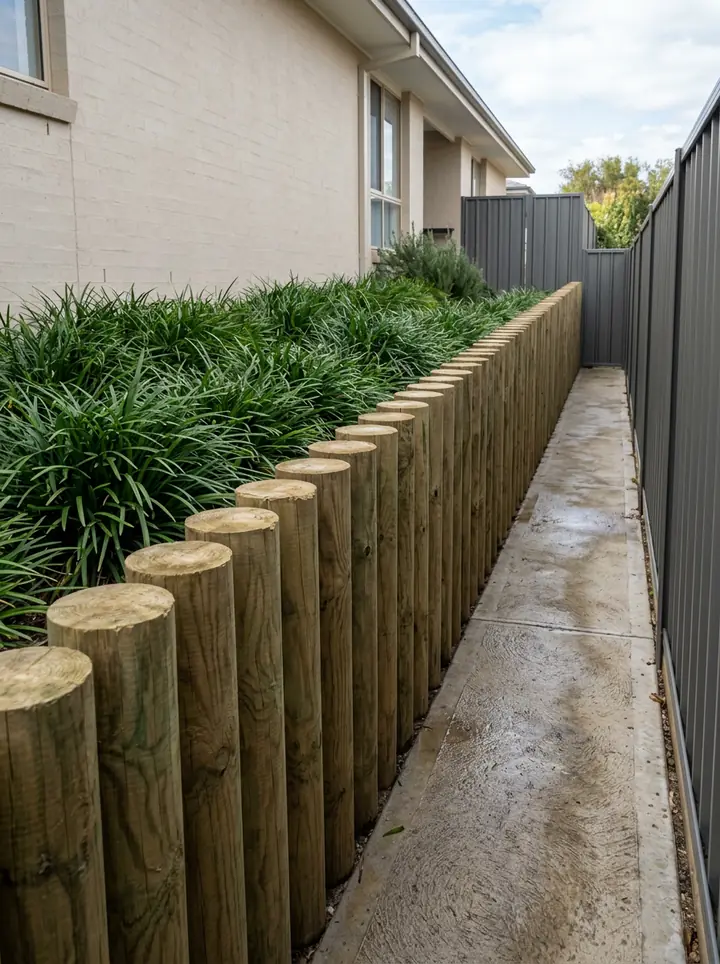
Straight And Level
A tidy edge along a path or a side passage, every top cut to the same height.
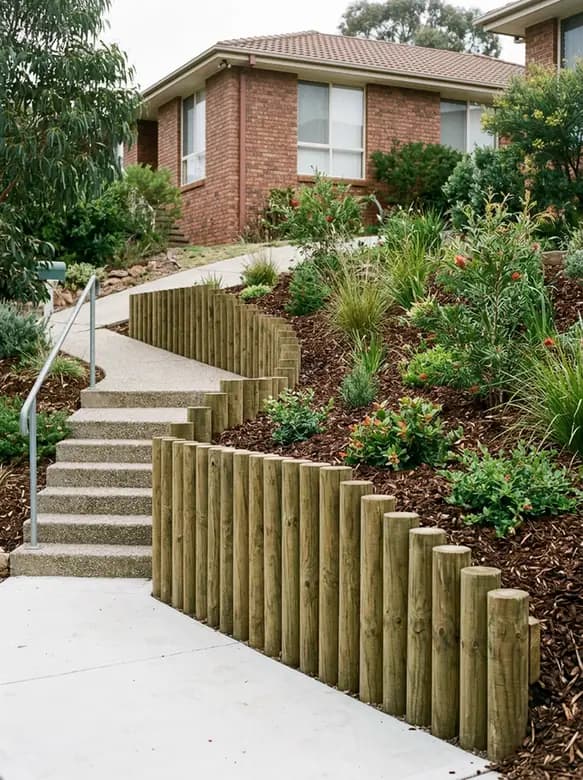
Stepped Down A Slope
The tops step down in even groups as the ground falls, so the wall follows the yard.
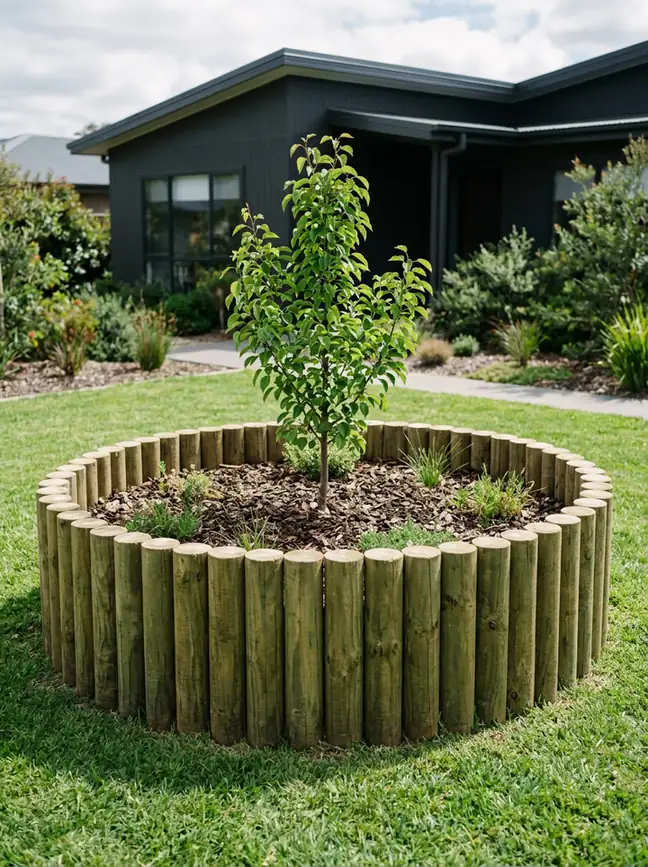
Curved Around A Bed
A round bed around a tree or a curved border, built one log at a time.
Log Sizes For A Palisade Wall
Treated pine rounds are sold from 75 to 200 mm across, in 1.8, 2.4 and 3.0 m lengths. The thicker the log, the more soil it can hold.
75 to 100 mm
Typical UseGarden edging and borders only a little above the ground.
The LookFine and even, a neat line along a path.
125 mm
Typical UseLow retaining walls and raised garden beds.
The LookThe most common palisade look.
150 mm
Typical UseWalls holding more soil, up to our usual 600 mm.
The LookChunky, and looks like a proper wall.
200 mm
Typical UseThe heaviest rounds, for walls toward 800 mm on the right site.
The LookBold and rustic.
The depth matters more than the log size. Whatever shows above the ground, at least the same again goes below it, so a 600 mm wall needs logs about 1.2 m long before the tops are trimmed.
H4 Or H5 Treated Pine
The H number is the hazard level the timber is treated for. Both are made for the ground, and H5 is treated for wetter, harsher conditions.
Treated For
H4 Treated PineTimber in contact with the ground.
H5 Treated PineTimber in wet ground, and posts that carry a lot.
Expected Life
H4 Treated Pine15 years or more, per the WoodSolutions design guide.
H5 Treated PineOver 25 years, per the same guide.
Where It Suits
H4 Treated PineGarden edges and landscaping walls that are not holding up anything important.
H5 Treated PineWhere the wall is structural, the ground is wet or exposed, or you want it to last longer.
Cost
H4 Treated PineThe standard log, and easy to buy.
H5 Treated PineDearer and not always in stock, so we check before quoting.
What A Palisade Retaining Wall Costs In Canberra
Every palisade wall is quoted on site. These are the four that matter most on this wall.
 PalisadeWe do not price walls by the square metre or by the metre of length. Every wall is estimated after a site assessment, from what your site needs.
What Moves The Price Of This Wall

Log Size
Thicker logs cost more each, but fewer of them fit in a metre.

Depth
Every log is buried at least as deep as the wall is high, so a taller wall means a deeper trench.

Shape
Curves and stepped tops take more setting out and more cutting.

The Ground
Rock and heavy clay make the trench slower to dig.
Palisade Or A Sleeper Wall
Both can be timber. The difference is which way the timber runs, and what that means for the job.
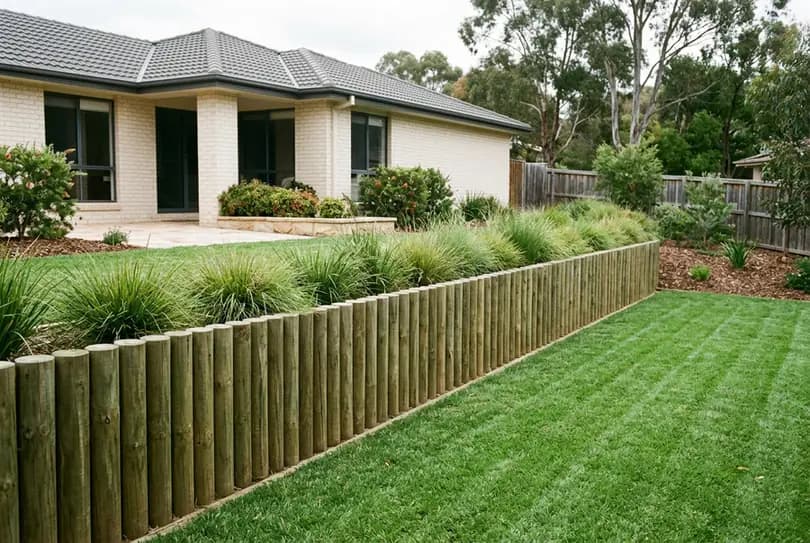
Palisade Wall
- How It Holds
- Every log is buried and concreted, so each one does the retaining.
- Curves
- Bends easily around beds, trees and paths.
- Timber In Each Metre Of Wall
- More timber in each metre of wall, because the logs sit side by side.
- Best For
- Low walls, curves, steps and tight access.
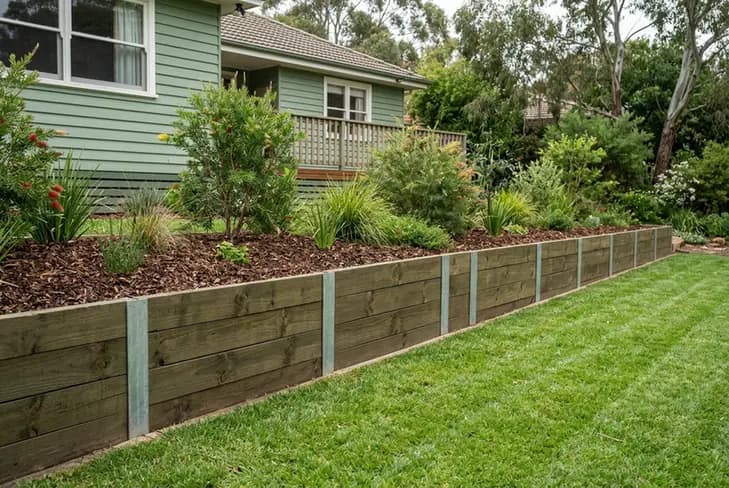
Sleeper Wall
- How It Holds
- The posts do the retaining, and the sleepers span between them.
- Curves
- Best in straight runs, with corners at a post.
- Timber In Each Metre Of Wall
- Less timber, and far fewer holes to dig.
- Best For
- Longer, taller runs and a flat face.
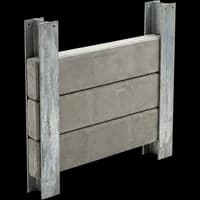
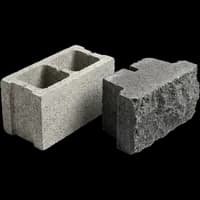
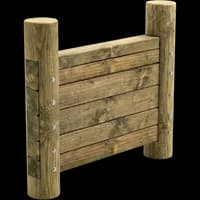
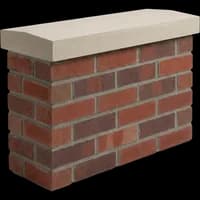
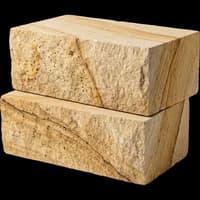
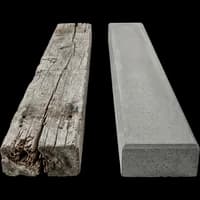
Other Retaining Walls Worth Comparing
If palisade is not the answer for your site, these are the other walls we build.
Palisade Retaining Wall FAQs
If yours is not here, ask when we come out.
How much does a palisade retaining wall cost?
There is more timber and more digging per metre than in a sleeper wall, because every log is buried and concreted. Every palisade wall is estimated on its own after a site assessment.
How deep do palisade logs go in the ground?
At least as deep as the wall is high, so about half of every log is buried. That is the depth the WoodSolutions timber design guide sets for round timber posts, and it is what stops the wall leaning.
How high can a palisade wall be?
Palisade suits smaller, low walls. We build it to about 600 mm high as standard, and may go up to about 800 mm depending on the site, the soil it holds, the timber and how it is built. For anything taller, a sleeper or block wall is the better choice.
Can a palisade wall be curved?
Yes. Each log stands on its own, so the wall can follow curves and circles that a sleeper wall cannot.
Is H4 or H5 treated pine better for a palisade wall?
H4 is made for ground contact and suits low garden edges and beds. WoodSolutions, the timber industry's guide, says timber that holds a structure up in the ground should be H5 or Class 1 hardwood. So for a wall that holds back a slope, or one on wet clay, H5 is the safer choice, and it lasts longer.
Do termites eat treated pine logs?
The treatment protects the timber against termites and rot. The cut tops should be sealed with a preservative, because a cut can expose wood the treatment did not reach.
Can palisade be built where a machine cannot reach?
Yes. The logs are handled one at a time, so it goes in down side passages where nothing heavy can be placed.
Is palisade or concrete sleeper better in Canberra?
For a straight wall, or anything over about 800 mm, concrete sleepers on steel posts are the longer lasting choice, because concrete does not rot and termites cannot touch it. Palisade is the better fit where the wall has to curve, step down with the ground or be carried in by hand down a narrow side passage.
Is palisade cheaper than a sleeper wall?
No. A timber sleeper wall is usually the cheapest to build. Palisade costs more than sleepers for the same length, because the logs stand side by side and each one is dug in and concreted. Palisade is worth the extra cost where the wall has to curve or step down with the ground.
Do I need approval for a low palisade wall in Canberra?
Usually not. Away from the boundaries, a wall holding back built-up soil, called fill, needs no development approval up to 1.0 m, and a wall cut into the slope up to 1.2 m. Within 1.5 m of a side or rear boundary, or in the front yard, the limit drops to 0.4 m, and even a 0.4 m palisade wall has at least 0.4 m of every log in the ground.
Send A Photo Of Your Site
A photo and a rough length and height is usually enough for us to tell you which walls will work, before anyone drives out.
Or call (02) 5114 2500Start Here