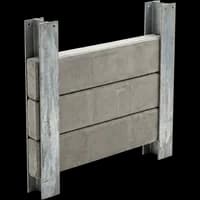
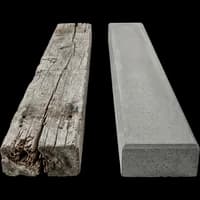
Concrete Sleeper
 Concrete Block
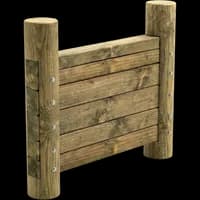
 Timber Sleeper
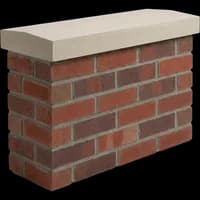
 Brick
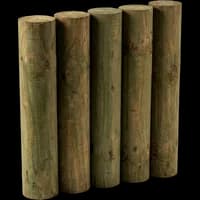
Brick Palisade
 Sandstone
 Repairs & Replacement
 What A Wall Costs
 Rules, Approvals & Engineering
 Most Common
Honey Yellow
Warm golden stone with light orange banding. It mellows to a softer tan over the years.
A sandstone retaining wall on a Canberra block is built from heavy stone blocks lifted in by a small excavator, so we check the access on site before you choose the stone.
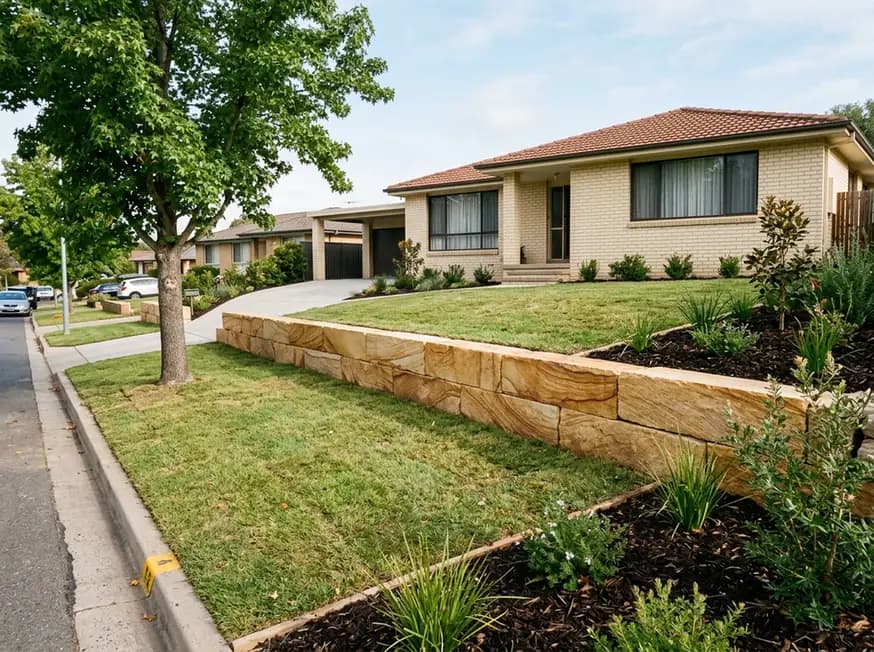
Yes, on the right site. Sandstone retaining walls are built from large natural stone blocks, called logs, usually 500 mm high and heavy enough to hold a low garden wall by their own weight. Each log is lifted in by a small excavator, so we check the access before you choose a stone.
Sandstone softens as it weathers and as the planting grows over it.
Low walls hold by the weight of the stone and a slight lean back into the slope.
An excavator lifts each log, so there has to be a way into the yard.
Sandstone for retaining walls is sold in a handful of standard sizes. The log is the one most walls are built from.
What It IsThe standard sandstone log, quarry sawn.
Used ForMost garden retaining walls, one course for every half metre.
What It IsA double length log.
Used ForLong, straight runs with fewer joints.
What It IsA billet, sometimes called a sandstone sleeper.
Used ForLow edges, steps and garden borders.
What It IsSmaller sawn or split blocks about 300 mm high, 900 to 1200 mm long.
Used ForLower feature walls and planters built by hand.
These are the standard sawn sizes suppliers sell into Canberra. Every load varies a little, because it is quarried stone.
Sandstone logs and blocks are sold in two main grades. The grade is about how the stone is cut, not how strong it is, and we source the grade that suits your budget and the look you want.
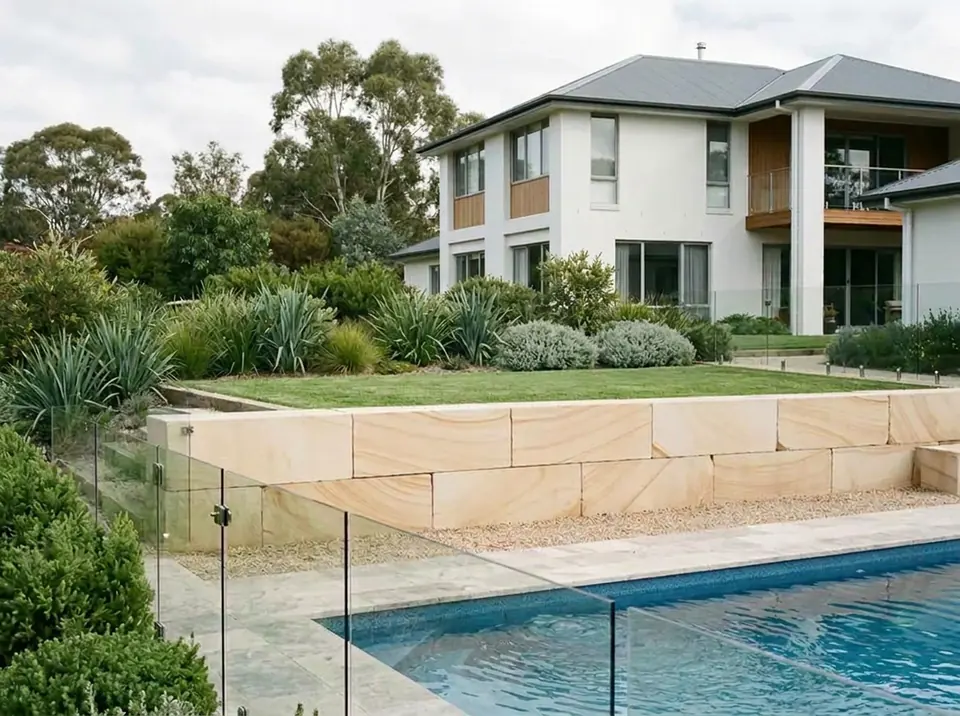
Sawn on four or more sides, with flat faces, square edges and even course heights. It gives a more uniform, neatly cut wall.
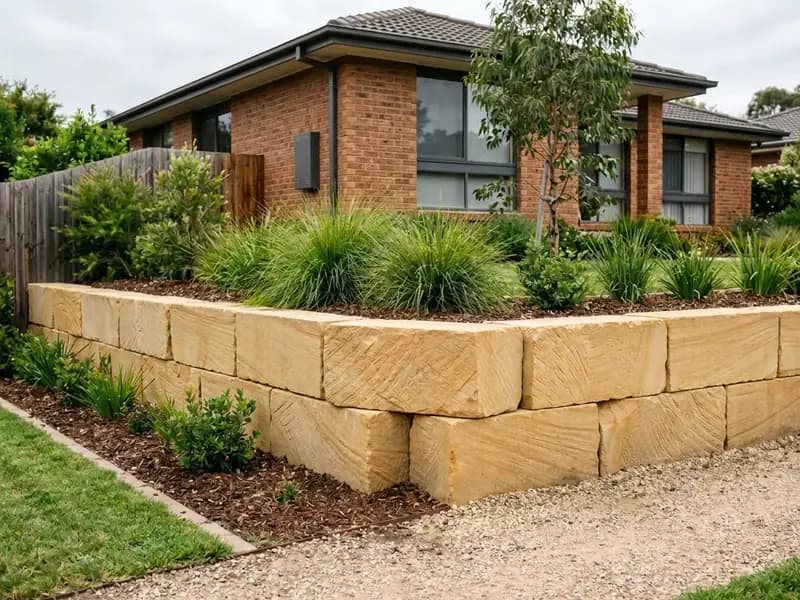
Sawn top and bottom, with a rough rock face front and more natural variation. It costs less and gives a rustic finish.
Sandstone comes in the colours of the quarry: honey and golden yellow, cream and off white, buff and tan, natural brown, pink and pink-brown, grey, and mixed or banded stone. What is available depends on the quarry, and we buy through Wholesale Sleeper Co, Canberra Sandstone and other suppliers.
Most CommonWarm golden stone with light orange banding. It mellows to a softer tan over the years.
 Light
LightPale stone for a crisp, modern look. It shows marks and lichen more in shady spots.
 Banded
Soft bands of pink and tan through a cream stone, different in every block.
 Warm
WarmSoft light brown and beige stone that sits quietly in a garden.
 Rich
RichDeeper brown stone with natural iron banding, for a strong, earthy wall.
 Cool
CoolCool grey stone that suits modern homes with dark cladding.
Natural Colours
Wall Types
Other Natural Stone
We build sandstone walls from A grade or B grade logs and blocks, as mortared sandstone masonry, as traditional dry stacked walls, and as natural sandstone boulder walls. Most log walls are dry stacked, with no mortar. Mortar is used where a wall carries more, or where smaller stone needs holding together.
Dry StackedThe weight of each log and a lean back into the slope.
MortaredLaid on mortar like masonry, usually on a concrete footing.
Dry StackedWater drains out through the joints, and through the gravel and ag pipe behind the stone.
MortaredNeeds weep holes and a drain behind, like a block wall.
Dry StackedSettles slightly, which is normal. It should not lean forward.
MortaredHolds its line, but can crack if the footing moves.
Dry StackedLarge logs and garden walls.
MortaredSmaller stone, taller walls and engineered designs.
Sandstone is placed by machine, so the build starts with how the stone gets to the wall.
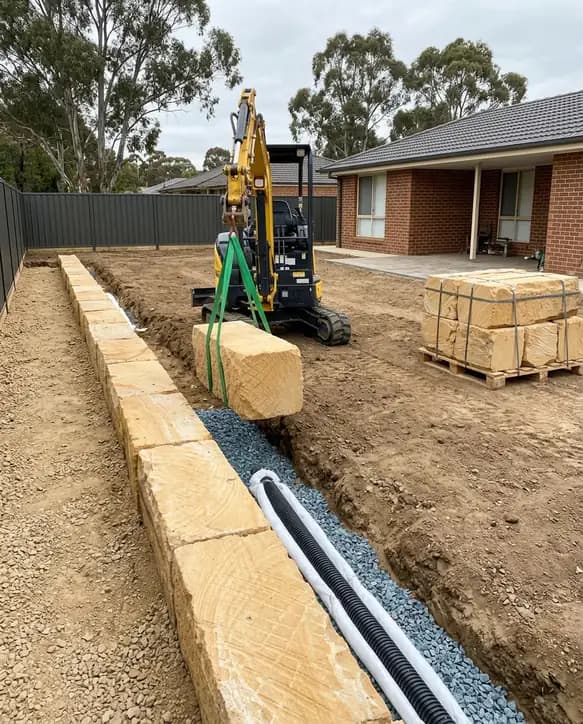
A standard 1 m sandstone log weighs about 580 kg, so a mini excavator needs a way into the yard. Smaller stone can be placed by hand, but the labour and the price change completely.
The wall line is dug out and a base of crushed rock is compacted flat, because the first course sets the whole wall.
The first logs are lowered in, levelled and set back into the slope.
An ag pipe in a filter sock runs along the base, with clean gravel and filter cloth behind the stone.
Each course goes on with its joints staggered, and the gravel is filled in behind as the wall rises.
Not Sure A Machine Can Get In? Send a photo of the side access and the slope, and we will tell you whether sandstone is possible.
Send Us A PhotoEvery 500 mm course adds height, and height is what the ACT rules measure.

A wall holding fill is exempt from a development approval up to 1.0 m, and a wall cut into the slope up to 1.2 m. Two courses is about 1 m.

Within 1.5 m of a side or rear boundary, or out the front, the exempt limit is 0.4 m, which is less than one log.

Three courses, about 1.5 m, is past the 1.0 m and 1.2 m limits, so it needs a development approval and may need a building approval too. At that height, or with a driveway or a building above, we have it designed by an engineer.
Measure the wall height in courses and the distance to each boundary on site.
Tell you up front if the wall needs approval or engineering.
Supply the drawings where they are needed. The homeowner lodges the application.
Every sandstone wall is quoted on site. These are the four that matter most on this wall.
 SandstoneWe do not price walls by the square metre or by the metre of length. Every wall is estimated after a site assessment, from what your site needs.
A grade sawn logs cost more than B grade rock face logs.

An excavator has to reach the wall line. Without one, the job changes completely.
Each 500 mm course adds stone and drainage, and past 1.5 m, engineering.

The compacted base, the gravel and the ag pipe under and behind the stone are all part of the price.
If sandstone is not possible on your site, these are the walls we would look at next.
If yours is not here, ask when we come out.
Every sandstone wall is estimated on its own after a site assessment, not off a square metre rate. The price moves with the height, the grade of stone, the access for the machine and the drainage.
A well built sandstone wall lasts for decades. The stone weathers and softens, but the wall stays put when the base and the drainage are done right.
Yes, where a machine can get in. The logs are heavy enough to hold a low wall by their weight, and taller walls are designed by an engineer like any other.
The standard log is 500 x 500 x 1000 mm, and 2 m logs suit long runs. Billets of 300 x 300 x 1000 mm suit edges and steps.
We generally do not seal sandstone walls. Sandstone is a fairly soft stone that weathers naturally, and we would rather let it age into its natural look. In our experience a sealer can spoil that look as the stone keeps weathering. We do seal other stone where it suits, such as bluestone, granite, and natural stone paving or cladding.
Yes. As well as sandstone, we build retaining walls in bluestone, also called basalt, granite and other natural stone, using the building method that suits the stone and the site.
Smaller stone can be placed by hand, but the labour changes completely and so does the price. We check the access before we quote it.
No. Sandstone look blocks are concrete, moulded and coloured to look like stone. Natural sandstone is quarried, heavier and different in every block.
Neither rots, and both make a strong wall when there is drainage behind it. Sandstone is natural stone that softens as it weathers, and each log holds a low wall by its own weight, but the logs need a machine to place them. Concrete sleepers and blocks give a more even wall, come in more colours and finishes, and suit taller engineered walls.
Away from the boundaries, one or two courses usually does not. A standard sandstone log is 500 mm high, so two courses is about 1.0 m, the most a wall holding back built-up soil, called fill, can reach without a development approval. A wall cut into the slope can go to 1.2 m. Within 1.5 m of a side or rear boundary, or in the front yard, the limit is 0.4 m, which is less than one log, so a sandstone wall there needs approval.
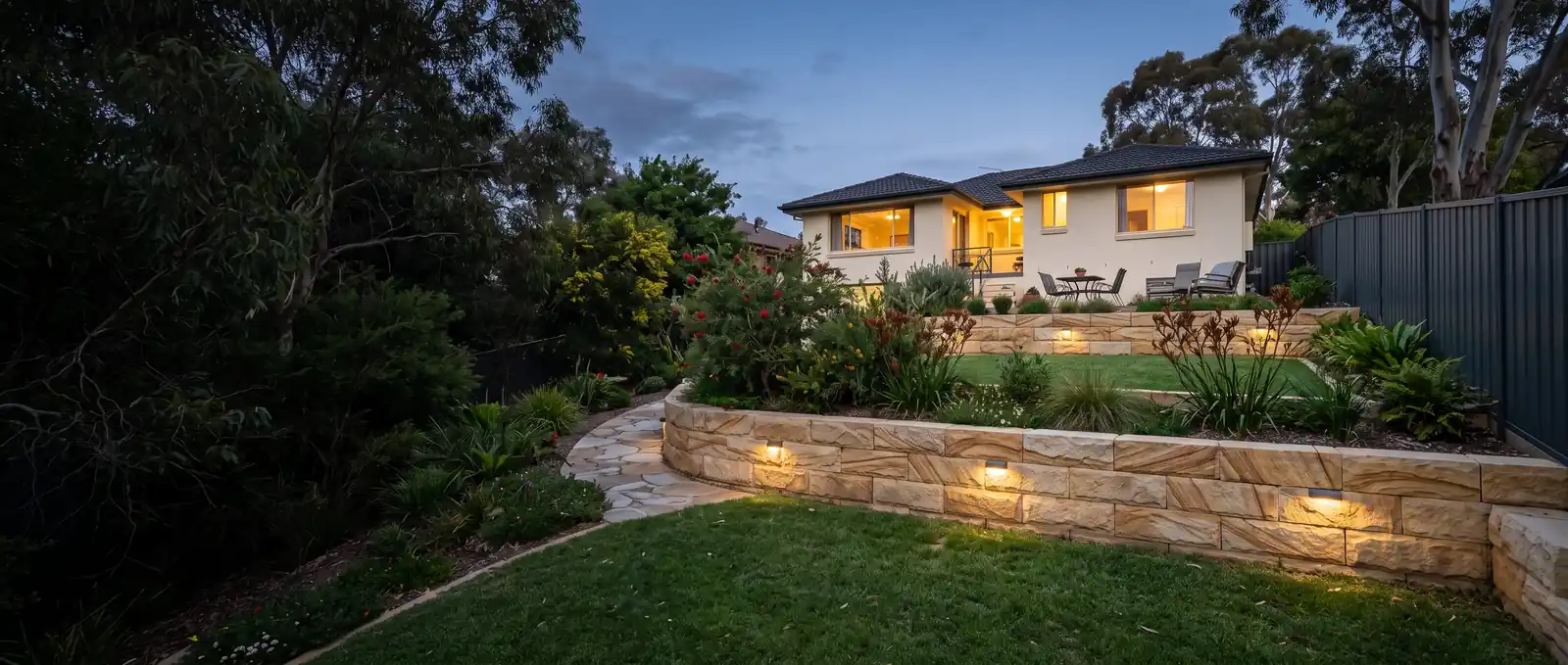
A photo and a rough length and height is usually enough for us to tell you which walls will work, before anyone drives out.
Or call (02) 5114 2500Start Here