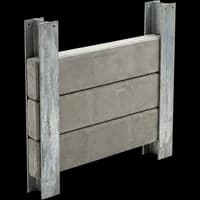
 Concrete Sleeper
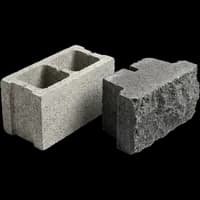
 Concrete Block
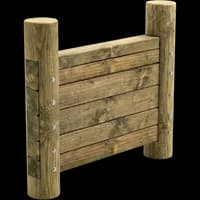
 Timber Sleeper
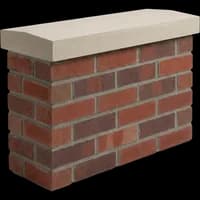
 Brick
Brick Palisade
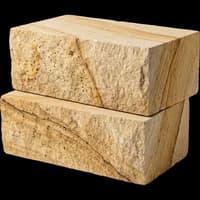
 Sandstone
 Repairs & Replacement
 What A Wall Costs
 Rules, Approvals & Engineering
Retaining Wall Repairs & Replacement In Canberra
We repair and replace leaning, cracked and rotting retaining walls across Canberra, and we look at every one on site first. We repair a wall when the damage is cosmetic or in one spot and the wall is sound, and if it has moved we generally recommend a new one with drainage behind it.
 Before: Rotting TimberAfter: Concrete Sleepers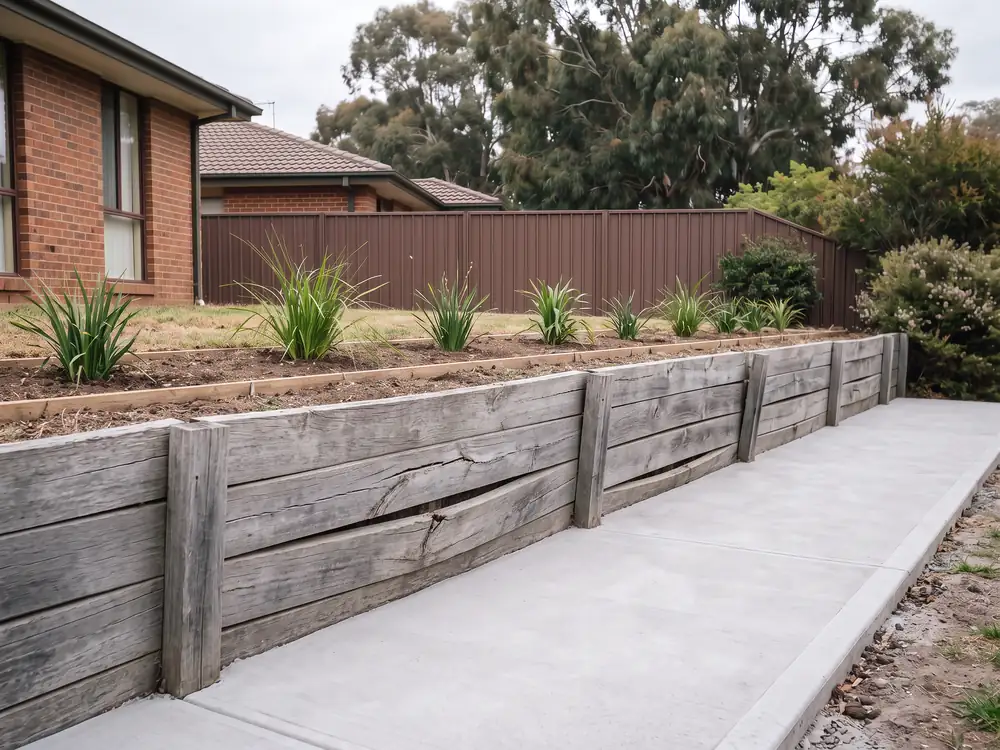
Can A Retaining Wall Be Repaired
Sometimes. We repair a wall when the damage is cosmetic or in one spot and the wall itself is still sound. If it is leaning, bowing or badly cracked, its footing has failed, or it is no longer stable, we generally recommend a new wall with drainage behind it.
Usually Repairable
The capping along the top, repointing, which is renewing the mortar between bricks or blocks, minor surface damage, and one damaged sleeper, block or stone.
Usually A New Wall
A wall that is leaning or bowing, has major cracks, has a failed footing or is no longer stable.
What We Check
How far it leans, the posts at ground level, the drainage and what sits above the wall. Where it is needed, we get structural advice before we quote.
Signs Your Retaining Wall Is Failing
Most walls fail slowly, and the signs often get worse after heavy rain. These are the three to look for.
 Movement
Leaning Or Bulging
The top of the wall tips forward, or the middle bellies out between the posts. A wall that has started to move will not straighten itself.
 Cracks
Cracks And White Stains
A crack that steps along the mortar joints, or is wider at the top, means the wall is moving. White powder below a weep hole, the small drain gap along the base of the wall, is called efflorescence, and it means water is working through the wall.
 Ground
Ground Sinking Behind It
A dip or a crack opening in the lawn behind the wall means the soil there is dropping, because the wall has moved or soil is washing out through it.
How Serious Is A Leaning Or Cracked Wall
Measure how far the top of the wall leans out past its base, and watch the cracks. The further it leans, the more likely the fix is a new wall.
Watch It
A fine crack or a small lean that has not changed. Take a dated photo and measure it again after heavy rain.
Get It Looked At
New cracks, a lean that is growing, or weep holes that have stopped draining. Send us photos and your measurements.
Keep Clear Now
A bulge, a lean that has moved quickly, or a crack that is wider at the top. Keep people and cars off the top and away from the base, and call us.
Lean bands from Retaining Walls Direct, a national supplier, which calls 20 to 50 mm moderate, where a new wall is often the better fix.
What To Do If Your Wall Is Moving
If a wall is leaning further, cracking or dropping soil, these steps help keep people safe until someone can look at it.
Do This
Keep People Off And Away
Keep children, cars and bins off the top of the wall and away from the bottom of it.
Take Photos And Measure
Photograph the wall from safe ground and note how far it leans, so you can see if it changes.
Tell Your Neighbour
If the wall is on or near the boundary, let your neighbour know, because a failing wall can affect their side too.
Avoid This
Digging At The Bottom
Digging in front of a leaning wall takes away the soil that is holding its base in place.
Adding Weight On Top
Parking, stacking materials or building up soil above the wall adds to the push.
Letting Water Run Behind It
Point downpipes and sprinklers away from the wall, because wet soil pushes harder.
Worried Your Wall Is Moving? Send a photo from safe ground and rough measurements, and we will tell you whether it looks like a repair or a new wall.
Send Us A PhotoWhy Retaining Walls Fail In Canberra
A wall fails when the soil behind it pushes harder than the wall can hold. These are the usual reasons, and in Canberra clay, water is often one of them.
No Drainage Behind It
With no gravel behind the wall and no ag pipe, a slotted drain pipe along the base, rain has nowhere to go and the soil stays wet.
Water Pressure
Wet soil is heavier and pushes harder on the wall. Canberra clay holds water, so the push stays on after rain.
Shallow Footing
Posts set too shallow, or footings too small for the height, let the base of the wall slide or tip.
Rot At Ground Level
Timber posts rot where they meet wet soil, and a rotten post lets the whole wall lean.
Weight On Top
A driveway, a pool, a shed or extra soil above the wall adds weight it was not built for.
Ground Sinking Behind
As the wall leans, the soil behind it drops and a dip opens up along the top.
What Happens If You Don't Fix A Retaining Wall
A retaining wall that has started to move does not fix itself. Every heavy rain adds weight to the soil behind it, so the fix gets bigger the longer it waits. Timber walls also wear out: WoodSolutions, the timber industry's guide, expects 15 years or more from H4 treated pine.
- First
The Lean Grows
Wet soil keeps pushing after every storm, and a wall that leans further has less holding it up each time.
- Then
The Ground Drops Behind
As the wall moves, the soil behind it sinks, taking lawn, paths, garden beds and fences with it.
- In The End
It Can Collapse
A wall that keeps moving can fall, and the wall and the soil behind it can land on a path, a driveway or the neighbour's side.
Repair Or Replace, By Type Of Wall
What can be fixed depends on what the wall is made of and which part has failed.
Timber Sleeper
Often RepairableRotten sleepers between straight steel posts can be swapped for new ones.
Usually ReplacedRotten or leaning timber posts mean the wall is rebuilt, usually on steel posts.
Concrete Sleeper
Often RepairableA cracked sleeper can be slid out and replaced if the posts are still straight.
Usually ReplacedPosts leaning or pushed forward mean the wall is rebuilt with new posts.
Block And Brick
Often RepairableWorn mortar joints repointed, a loose cap reset or one damaged brick or block replaced, if the wall has not moved.
Usually ReplacedA wall leaning, or cracked right through, is taken down and rebuilt on a new footing.
Sandstone
Often RepairableA block or a cap that has slipped can be lifted out and reset.
Usually ReplacedA wall that has slid or leans as a whole is rebuilt on a new compacted base.
A repair only lasts if the cause is fixed too, and that usually means the drainage behind the wall.
Replacing A Timber Wall With Concrete Sleepers
Swapping an old timber retaining wall on timber posts for concrete sleepers on steel posts changes the posts, the drainage, how long the wall lasts and how it looks.
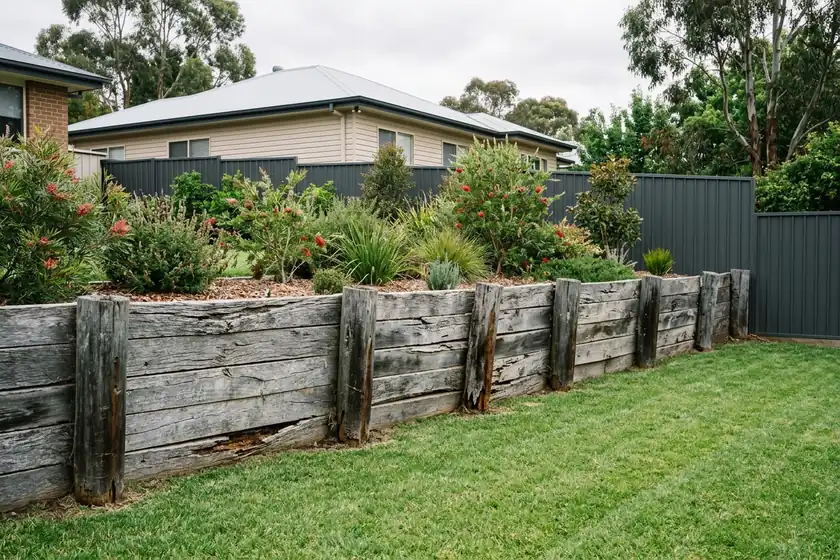
The Old Timber Wall
- Posts
- Timber posts, rotting at ground level.
- Drainage
- Often built with no gravel or ag pipe behind it.
- How Long It Lasts
- 15 years or more in pine treated to H4, the rating for timber in the ground, per the timber industry's guide.
- Look
- Grey, split timber.

The New Concrete Sleeper Wall
- Posts
- Steel H posts coated in zinc against rust, called galvanised, and concreted into the ground.
- Drainage
- Gravel, an ag pipe and filter cloth along the full length.
- How Long It Lasts
- Concrete does not rot, and termites cannot touch it.
- Look
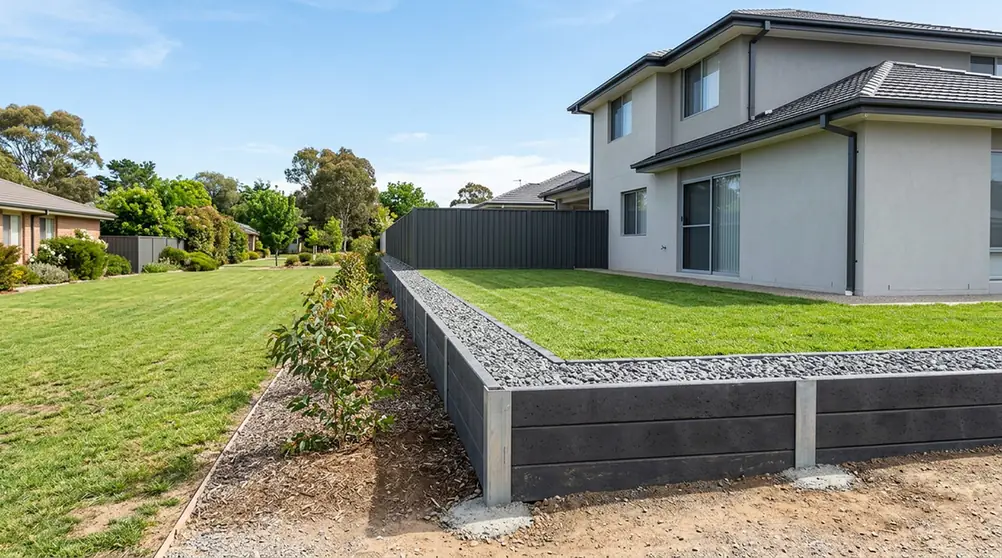
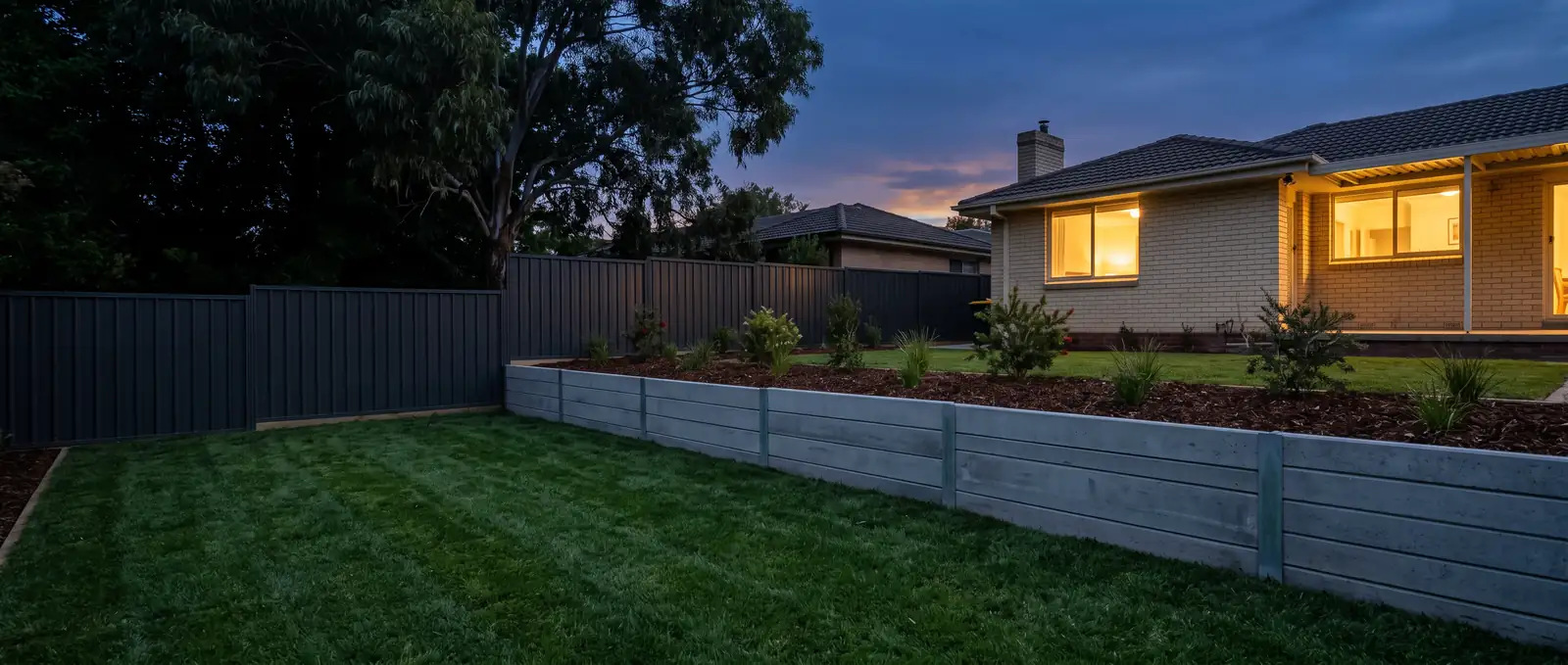
- Smooth, timber look, stone or rock faces, in charcoal, natural, tan, beach or blackwood.
The new wall can go on the same line as the old one. If you prefer the timber look, it can be rebuilt in timber on steel posts.
See Our Concrete Sleeper WallsHow A Retaining Wall Replacement Goes
A replacement is a new wall, designed for the height and the ground as they are now.
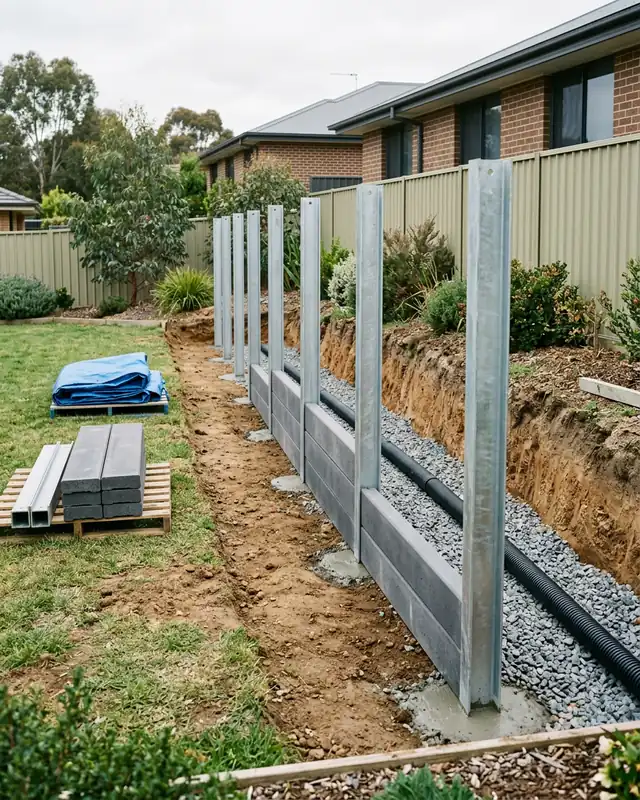
- 01
Look At The Wall
We check the lean, the posts, the drainage, the height and what sits above the wall, measure the distance to each boundary, and get structural advice where it is needed.
- 02
Approvals And Engineering
If the new wall needs approval or an engineer's design, we tell you before anything is pulled out.
- 03
Take The Old Wall Out
The old sleepers, posts and footings come out and are carted away, and the soil behind is cut back.
- 04
Footings And Drainage
New posts or a new footing go in, with an ag pipe along the base and gravel behind.
- 05
Build And Backfill
The new wall goes up, gravel is filled in behind it as it rises, and the site is cleaned up.
How A Repair Is Priced
Every repair or replacement is quoted after we see the wall. These are the four that matter most on a repair.
 Repairs & ReplacementA repair can be a few new sleepers or a whole new wall, so every job is priced after we see it.
What Moves The Price Of A Repair

Repair Or Rebuild
New sleepers between sound steel posts cost far less than a whole new wall.

Removing The Old Wall
Taking the old wall out and carting it away is a real cost, and it belongs in the quote.

Drainage
Trapped water is one of the main reasons walls move, so gravel, an ag pipe and filter cloth go behind the new one.

Height And Load
A taller wall, or one with a driveway above it, needs bigger posts and footings. Between 1 m and 1.5 m, whether it needs an engineer is confirmed on the quote, and past 1.5 m it always does.
Do You Need Approval To Replace A Retaining Wall
ACT Planning's guide has no separate rule for replacing a retaining wall, so we check the new wall against the same heights as a new one. The rules do exempt some repairs in the same material, and rebuilding a damaged wall that was approved, so ask a building certifier, the licensed person who signs off building work, to confirm it for your wall.
Taking The Old Wall Out
On a home block, taking out an old retaining wall generally needs no development approval, because the ACT rules exempt pulling down a retaining wall in a residential zone. That changes if the block is heritage listed or the wall sits in an easement, a strip of land kept for pipes or cables. An old wall over 1.2 m can also need a building approval to take down.

Near A Boundary Or Out The Front
Within 1.5 m of a side or rear boundary, or in the front yard, a new wall over 0.4 m needs a development approval.

Everywhere Else
Away from the boundary and the front yard, a new wall holding back built-up soil, called fill, needs no development approval up to 1.0 m, and one cut into the slope up to 1.2 m. Anywhere on the block, a wall up to 1.2 m generally does not need a building approval.
What We Do About It
- 01
Measure the height of the new wall and its distance to each boundary.
- 02
Tell you before the old wall comes out if the new one needs approval or engineering.
- 03
Supply the drawings where they are needed. The homeowner lodges the application.
Boundary Walls, Neighbours And Insurance
Who pays for a failed boundary wall, and whether insurance covers it, depend on your own case. A lawyer or your insurer can tell you where you stand.
Whose Wall Is It?
The ACT's fence law, the Common Boundaries Act 1981, covers dividing fences and shared building walls. It does not mention retaining walls.
Canberra law firm MV Law says the ACT Civil and Administrative Tribunal, called ACAT, has no specific power under that Act over retaining walls that hold up land, so these disputes can take more work to sort out.
Start by talking to your neighbour. A surveyor can confirm where the boundary is, and the ACT Conflict Resolution Service offers free mediation between neighbours.
Source: MV Law, Resolving Boundary Fence DisputesWill Insurance Cover It?
It depends on why the wall failed and what your policy says. Suncorp's wording, for example, covers retaining walls at the insured address for damage caused by insured events, which are the events the policy lists.
The same wording excludes damage from wear, tear and deterioration, or from part of the home not being in good condition, and a wall that has rotted or stayed wet for years may fall under that.
Read your policy's product disclosure statement, called the PDS, ask your insurer, and take photos before the old wall comes out.
Source: Suncorp, Outdoor Walls, Gates And Retaining WallsRetaining Wall Repairs & Replacement FAQs
If yours is not here, ask when we come out.
How much does it cost to repair a retaining wall?
A repair usually costs far less than a replacement. Resetting a cap or replacing one damaged sleeper costs far less than a new wall, and a replacement adds removing the old wall to the price of the new one. We quote after seeing the wall.
Can a retaining wall be repaired?
Yes, when the damage is cosmetic or in one spot and the wall is still sound. If it is leaning, bowing, badly cracked, its footing has failed or it is no longer stable, we generally recommend a new wall.
What retaining wall repairs do you do?
Selected repairs on walls that are still structurally sound: the capping along the top, repointing the mortar between bricks or blocks, minor surface damage, replacing one damaged sleeper, block or stone, and other small fixes in one spot. We look at every enquiry first, and get structural advice where it is needed.
Can a leaning retaining wall be pushed back?
No. Once a wall has moved, the ground behind it has moved too, and the wall will not stay straight without being rebuilt.
What causes a retaining wall to lean?
Usually water trapped behind it, posts or footings too small or too shallow for the height, rotten timber posts, or extra weight on top such as a driveway.
Is a crack in a retaining wall serious?
A fine crack in a wall that has not moved is often only on the surface. A crack that steps along the mortar joints, is wider at the top or keeps getting longer means the wall is moving, and it should be looked at.
What happens if you don't fix a leaning retaining wall?
It usually keeps moving, slowly at first and faster after heavy rain. A wall that collapses can damage fences, paths and your neighbour's yard, and the job gets bigger the longer it waits.
Do I need approval to replace a retaining wall in Canberra?
Taking out an old wall on a home block generally needs no development approval, and we check the new wall like any new one. Within 1.5 m of a side or rear boundary, or in the front yard, that means approval over 0.4 m, and elsewhere over 1.0 m for built-up soil, called fill, or 1.2 m for a wall cut into the slope. Some like-for-like repairs are exempt, so ask a building certifier, the licensed person who signs off building work, to confirm it for your wall.
Who is responsible for a retaining wall between neighbours in the ACT?
The ACT's fence law, the Common Boundaries Act 1981, does not mention retaining walls, so it depends on your case. Talk to your neighbour first, have a surveyor confirm the boundary if needed, and get legal advice before any work starts.
Does home insurance cover a failed retaining wall?
Sometimes, when an insured event caused the failure. Suncorp's wording, for example, covers retaining walls for damage from insured events and excludes wear, tear and deterioration, so read your own policy before the wall is removed.
Do I have to pay to remove the old wall?
Yes, and it should be listed in the quote rather than appearing later. Taking the old wall out and carting it away are real costs.
How long does a retaining wall replacement take?
Longer than a new wall in the same spot, because the old wall comes out first. Then the new one is built like any new wall. The length, the access and any approval or engineering set the time frame, and we give it to you with the quote.
Walls We Can Replace It With
A replacement can be any of these walls. Which one suits comes down to the height, the access and what sits above the wall.

Send A Photo Of Your Site
A photo and a rough length and height is usually enough for us to tell you which walls will work, before anyone drives out.
Or call (02) 5114 2500Start Here